
Much ink has been spilled over Chinese acquisition or indigenous production of military assets, not least in the Pentagon’s latest report on the country’s rapid military development.
The launch of China’s first aircraft carrier a couple of weeks ago was just the latest event to fuel speculation over the country’s objectives. The news followed the Chinese Anti-Ship Ballistic Missile DF-21D reaching initial operational capability last year and the first flight of the 5th generation J-20 stealth fighter, which took many Western analysts by surprise.
Still, despite the numerous one-off articles, there hasn’t until now been a place in English that brings together all the pieces of the puzzle. That is until the recent publication by the China Maritime Studies Institute of Chinese Aerospace Power: Evolving Maritime Roles. The volume, a collection of essays, offers a comprehensive overview of all the latest developments, and touches on the whole spectrum of the Chinese aerospace capabilities – from air-refuelling capabilities and space assets to airborne early warning and electronic warfare capabilities. The essays, from some of the most highly regarded analysts in the field, help provide a good understanding of the state of Chinese aerospace modernization. The book not only examines the technical feasibility of Chinese plans, as well as their strengths and weaknesses, but also delves deep into domestic Chinese debates about the weapons systems in question.
The volume manages to get to the core of the issue through open source analysis that compares and contrasts Chinese writings on the topic from a variety of official and unofficial sources, offering a far broader perspective than volumes focusing only on Western analysis. Indeed, Chinese Aerospace Power delves deeply into the Chinese system, examining inter-service rivalries and integration and training issues.
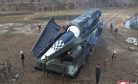
Contributions to the volume argue that sophisticated aerospace capabilities offer the advantages of power projection and precision strikes, which considerably widens the range of operational choices for any military power. For example, while the main argument against the accuracy of the Chinese ASBM DF-21D is mediocre Chinese ISR (Intelligence, Surveillance and Reconnaissance) capabilities, the country’s rapid aerospace progress raises doubts over the validity of such arguments. The Naval War College’s Andrew Erickson, for example, argues that as China expands its range and improves the accuracy of its weapons, it could render a carrier strike group ‘operationally ineffective without sinking it.’
While a number of contributions focus on the tactical and operational level, there’s also strategic coverage as well. For instance, both The Diplomat blogger James Holmes and Adm. Eric McVadon go beyond the operational and tactical to make some interesting policy recommendations. Holmes offers an insightful analysis of the ways in which Chinese strategy has been influenced, not just by the domestic strategic culture, but also by Western Mahanian ideas. McVadon, at the grand strategy level, emphasizes the misleading distinction between partners and potential adversaries, and opines that engagement-focused approaches should gain ground over attempts at hedging.
Broadly speaking, and based on a comprehensive overview of China’s military capabilities, the book provides strategists and policy makers with one core recommendation: given the highly uncertain outcome of a confrontation between the two countries, effective crisis management mechanisms and long-term cooperative engagement strategy are of paramount importance.
The book is a must-read piece for every government official involved with China-related issues, military or otherwise. If knowing your interlocutor is a prerequisite for successful negotiations, the book should be a big step towards providing a balanced and necessary understanding.


John Chan
No one will trust people or nations of “honey words and pious gesture”; actions speak. There are plenty grandeurs talks of crisis management mechanisms, long-term cooperative engagement, and big step towards providing a balanced and necessary understanding, yet in actuality, it was encirclement, containment, hedging, embargo, sanction, undermining, etc. endless attempt to suppress, cripple and destabilize China. Perhaps the Westpac believes only lip service is enough to fool China to let its guard down so that the Westpac can repeat the feat they have done to China in the last 200 years.
If the Westpac really wants to show that they said what they meant, they should take some actions to prove their sincerity, such as:
1. Abolish all their military and high tech embargo against China.
2. Abolish Taiwan Relation Acts and publicly encourage Taiwan returning to China.
3. Force Japan to leave Ryukyu and let Ryukyu Kingdom returns to it independence.
Without positive actions to dispel Westpac’s insidious intent, China must continues to modernize its defence capability to protect itself against the predatory imperialist Westpac.
* Westpac (Meaning mainly the US with UK its lieutenant and Japan its major vassal state and a host of second tier associate nations.)
elportonative77
Um let me think about it. Hell no.
megakids
Hmmm….then status quo. Back to starting point. You play, we play along. Have fun going down the tube to Third World America…hahaha!
yang zi
@John Chan, the containment, hedging, undermining all service as a reminder for Chinese to get busy and get better. so they are net positive. I have full confidence China will overcome these challenges.
as for your three items, I don’t think they will happen. I think the best solutions are:
1. make military tech embargo is irrelevant. China’s own weapon tech will be better
2. China is so strong that the Taiwan Relations Act is useless and doesn’t have teeth.
3. Ask Japan to demilitarize Ryukyu. that is, remove land and undersea military installations.
In my view, reaching these goals are not that difficult. just put in a good system of check and balances, competition and innovation. China can reach this in no time.
vufan
Chinese is still an aggressive invader in Asia, their territory ambition will be never end !
Joseph Tan
Back-up of what you say. Don’t make sweeping statement!
nirvana
I had been wondering, between John Chan’s and Yang zi’s, which position is closest to the official one of the Chinese state, or the dominant one in that state (obviously, the one of the growing military establishment of China).
But reading recently a definition of “peaceful co-existence” during the Cold War, I found that this strategy of the Soviets was one reason for the Sino-Soviet split. For Mao, “peaceful co-existence” equates to “revisionism”.
Since John Chan is a self-declared Maoist, I concluded that Yang zi’s position must be the one that reflects the official one. Indeed, China buys most of its military know-how from the old Soviet bloc and the best friend of her former enemy.
Needless to say, they both share a common goal: making China equal to the US, by ALL MEANS.
Tony L
Of course China aims to not only be equal to US but also surpassed the relatively small country of 300 millions. But China has time on their side… I doubt US has if they continue to spend as if there is no tomorrow.
aaron
So basically you’re saying the U.S. should just do whatever China wants and ignore it’s own interests. John, you need to find another website to troll; The Diplomat is meant for an intellectual audience and your propaganda is very elementary, you don’t even make it interesting.
ozivan
@John Chan. You said : * Westpac (Meaning mainly the US with UK its lieutenant and Japan its major vassal state and a host of second tier associate nations.)
In the article “Are China & US Destined To Clash ? “, in my reply to Nickatdabeach on August 3, 2011, I mentioned I had a casual political sharing with a local CCP leader in Dalian in 1995. Amongst others, he spoke about the US’s lieutenants, something that never came to my imagination.
He commented that China sees that the US keeps 4 watchdogs in the world.
The Americans keep the “British watchdog” to guard Europe from mischief. In the Middle-East, the watchdog was Israel. In North-East Asia, it’s Japan. Over South Asia and South East Asia, they appointed Australia.
The rest of countries were significantly less important in US’s geopolitical security.
SimonSays
You always talkabout America’s vassal states, colonies and lieutenants but what is China’s alternative? Invasion then assmiliation or tributary state? America, despite its hugely disproportionate power treats other countries as equals under the Western nation state system even if it does apply political pressure on key issues. America does not collect taxes from its “vassal states” and even lets them rack up huge trade surpluses against America.
vokoyo
當我們看中國的外交,卻發現她很多時會在違背自身價值觀和利益的情況下,向各國妥協。可見中國外交的失敗。
中共所實行的睦鄰政策,可說是徹底的失敗。中共現在的領導人奉行鄧小平那套所謂的「韜光養晦」政策。但其實,這只是一種逃避挑戰的鴕鳥政策。當今中國所面臨的惡劣國際環境,則決定了這種鴕鳥政策必然失敗。
在這種鴕鳥政策主導下,中國外交不僅畏首畏尾,更胸無大志,既沒有系統的外交戰略,也沒有長遠的外交目標。這種頭痛醫頭、腳痛醫腳式的外交政策,直接導致中國外交在面對各種挑釁時束手無策,盡顯軟弱之態,面對大好機遇時,也因毫無戰略準備而無所作為。
對印度對日本甚至是越南,中國都是畏首畏尾,一昧退讓,實行韜光養晦。本來,鄧小平的韜光養晦,是指平時積蓄力量,關鍵時刻果斷出手,是一種積極進取的外交思維。但現在,卻成了一種鴕鳥政策,令人無奈。
其實,按照中國現在的實力,根本不用如此讓步,中共對東南亞國家,對日本,甚至是越南,都讓得太多。完全顯示不到大國風範,畏首畏尾的外交政策,只會令中國人蒙羞!
至於對印度和越南的外交處理手法,中共簡直令人覺得恥辱。情況就好像當年清政府打贏法國,但仍然賠償法國一樣。令人覺得是絕大的恥辱。
中國在和俄羅斯,印度,日本,越南等周遍強國的政治經濟往來中,沒有佔到多少便宜,也沒有讓這些列強放棄對中國崛起的偏見和敵視,自身利益不斷被侵占,不能不說中國的外交政策有很大缺陷,這是中國國家佈局計劃和外交政策慘敗的最佳體現。
中國常常想成為一等一的大國,但他的外交卻事事以懦弱的方式勉強了事,實在不能給人任何強國的風範。
Beobachter
This is the most idiotic comment ever left by John Chan – surely no mean feat given the nonsense he has been disseminating on this site for months.
John, What you are are saying then is that in order for “Westpac” to be perceived as treating China fairly East Asia should be reordered according to Beijing’s wishes?
Do the opinions, interests and desires of the people that live on Taiwan and Okinawa count at all? Why should Taiwan be encouraged to return to China? Does the continued existence of a free and democratic island of 23 million people hurt the feelings of the Chinese people? Maybe the mainland should be returned to the ROC.
Returning to a state of Chinese imperial suzerainty over East Asia is not the only option for promoting peace in the region even if cry babies like John Chan won’t accept anything less.
Joseph Tan
Democracy is a very nice word to hold whatever brutality and killing directed all the way up to Taiwan Defence Ministry itself please read the book – Lord of the Rim by Seagrave) Democracy in Taiwan is not flowered naturally in Taiwan. Instead it is being forced upon Taiwan, rightly or wrongly, by America. At least the Chinese communist leadership however imperfect they were, never ordered this kind of killing
Beobachter, just want to ask – what authority have you in speaking on behalf of the 23 millions Taiwanese or condemned 1.2 billion in China
Or to speak on behalf of Okinawans? And do you know that prior to the illegal annexation of Okinawa by Japan, Okinawans king had to get the consent from the Chinese Emperor before his ascension to the throne?
LeonO
Firstly: You have obviously never been to Taiwan or interacted with a Taiwanese person. If you had, you would know many Taiwanese, particularly the young, define themselves by their separateness and independence from the mainland.
Secondly: Your claim that the U.S is “forcing” democracy upon Taiwan or even has the power to do so is delusional. A cursory knowledge of Taiwanese politics would would prove that.
Thirdly: “At least the Chinese communist leadership however imperfect they were, never ordered this kind of killing.” This is a joke, right?
John Chan
@LeonO:
The Japanese colonization had deep impact on the Taiwanese, KMT’s white horror did not help, and therefore there is deep sentiment of Japanese wannabe in Taiwan.
Fortunately Taiwan got Chiang Ching-Kuo who turned Taiwan around and made Taiwan prosper twenty years ahead of China, unfortunately the new worth turned Taiwanese into nouveaux riche. But China’s rise made Taiwanese hard to face the reality with right attitude, the contradictory complex is fully exposed in those TV programs specialize on trashing China in Taiwan. Spoiled and superficial Taiwanese youth under consistent exposure of those retarded and anti-China TV programs, it is hard for Taiwan youth not to feel detached from China. Maybe China should review the reunification strategy in Taiwan on how to overcome those anti-China elements in Taiwan.
LeonO
Taiwanese aren’t anti-China, they are pro-Taiwan. Additionally, Taiwanese youth don’t need to be brainwashed into fearing and distrusting the PRC when most have vivid memories of PRC belligerence. It was only 15 years ago that the PRC fired missiles within 25 to 35 miles of Taiwanese ports (Keelung and Kaohsiung) during the Third Taiwan Crisis.
Regarding “The White Terror” you repeatedly mention, as horrific as that was, it doesn’t compare to the numbers killed by the Communist Party during the Great Leap Forward and the Cultural Revolution.
John, I hate to play the man instead of the ball, but perhaps you should look a little closer at the PRC education system and its effects upon yourself before you start slinging accusations about “White Professor’s” poisoning the minds of young Taiwanese students.
John Chan
@LeonO:
With amount of white academics working hard to poison the relationship between Taiwan and China in Taiwan universities, it is also hard for Taiwan young not to “define themselves by their separateness and independence from the mainland.”
John Chan
@Beobachter:
Once China and Taiwan are reunited, it is hard to say whether ROC or PRC will be the official name for China, and it is also hard to say whether Sun Yat-sen’s Three Principles of the People would replace Communism in China as governing principle.
Anyhow this kind of integrity and patriotism of Chinese politics is hard for the egoistic westerners to comprehend, therefore your comment only reflects the bad faith the westerners have toward China, keeping China disunited and weak.
Leonard R.
That’s a remarkable idea John Chan, that a unified Taiwan & PRC might change the country’s name and dump Mao for Sun Yat Sen.
It won’t happen. But I wish it would. And I give John Chan credit for a truly original idea. The world would certainly be a better place hat something like that came to pass.
It’s fantasy. But it’s a nice fantasy.
John Chan
@Leonard R:
Did you find out who is on the portrait on the Tiananmen Square that was on the opposite to Mao on the national day with big military parade? Leonard, you know too little about China.
Cyrus
Why not Mao, Sun Yat Sen, and Shiang Kai-Shek. That would complete the picture.
megakids
@Beobachter
I think the more idiotic is the person who actually claimed that he believed and represented 23M Taiwanese whom he thought are living in a “free and democratic” place. This has to be one of the greatest cognitive dissonance you can find in Diplomat Forum. The freedom to lock up the legislative hall; to throw furniture at fellow legislators; to play with dirty “black gold” money, causing a bullet to shoot through Lian Shen Wen’s face and killed a passer-by. Oh….do I have to go on? Free and democratic!! Don’t fool yourself.
John Chan
Used to be there was no difference between legislature chamber and canteen in Taiwan, Taiwan legislators consume their takeout, such as 排骨湯麵, at their seats in the legislature chamber while national legislation session was in progress. The bowl of 排骨湯麵 was the grenade if the legislator did not get his way. Taiwan legislators found out rice was not an effective tool to deter other legislators.
大便 was grenade in the Japanese and Korean legislature chambers too.
Art
John Chan, did you forget to take your medicine again this morning or is your tin foil hat on too tight?
megakids
@Art
Personal attack has no place in this forum. If you want to comment or counter a point, spit it out. The rest, shut your mouth!
Sam
@megakids. Thanks for your admonition. Of course nobody is going to follow it and you will return to your pathetic existence afterwards.
50 cent army
what do you expect from John Chan…troll somewhere else please!!
John Chan
@50 cent army:
Are you questioning the editor of The Diplomat’s judgement? The editor of The Diplomat would remove comments that do not make a contribution to the debate. Or are you proposing totalitarian practise on the Diplomat i.e. suppress freedom of speech? If it is case then you are the one does the free world no good, as well as harming the Diplomat.
If you do not agree my comment, please post yours, I will read your comments carefully with open mind.
Mr. 50 cent army, perhaps you let your emotion clouded your mind. My comments mean no harm to anybody, and I merely expose those articles and comments portrayed China unfairly.
Sam
1. ‘The editor of The Diplomat would remove comments that do not make a contribution to the debate.’
2. ‘Or are you proposing totalitarian practise on the Diplomat i.e. suppress freedom of speech?’
There you go John Chan. If 1 above is true, you would have no comments left here at The Diplomat. 2 contradicts 1 John Chan because if The Diplomat did 1 it would be doing 2 also , so ‘or’ is a poor choice of words.