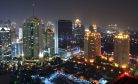




In their article “How the rise of the megacity is changing the way we live,” the Guardian correspondents Paul Webster and Jason Burke profile Chengdu, a once lush and lethargic city of 500,000 back in 1950 that today is now a bustling and bursting metropolis of 14 million. Chengdu is just one of many cities found throughout the developing word that are acquiring “mega-city” status.
The Guardian reporters mention the building of two monuments aimed at shining the global spotlight on Chengdu, a city most famous for its teahouses where the young and the old laugh the day away playing cards:
“The New Century Global Centre is a leisure complex that will house two 1,000-room five-star hotels, an ice rink, a luxury Imax cinema, vast shopping malls and a 20,000-capacity indoor swimming pool with 400 meters of “coastline” and a fake beach the size of 10 football pitches complete with its own seaside village. Alongside will be another massive and futuristic structure, a contemporary arts centerdesigned by the award-winning Iraqi-born architect, Zaha Hadid.”
By definition, mega-cities are overwhelming – their problems more so than their potential. The center of Johannesburg, a recently minted mega-city, brims with slums of frustration and desperation, while its margins grow fat with financial centers and gated communities. The by-products of Beijing’s overcrowding are air pollution and traffic congestion, and its insatiable appetite for water and fuel deplete the surrounding provinces of their own potential. What makes mega-cities particularly daunting is their unmanageability, only worsened by the constant influx of migrants, who with their cheap labor and political disenfranchisement permit the middle class to achieve a high standard of living, but whose need for healthcare and housing the middle class refuse to pay for.
The Guardian article quotes Chengdu’s mayor, Ge Honglin, who understands the inherent instability in planning a “mega-city” in Sichuan, one of China’s poorest provinces and a steady supplier of migrants to China’s booming coastal cities:
“Chengdu's mayor, Ge Honglin, claims that the city has avoided some of the problems associated with migration into the cities by encouraging families to stay in the countryside. ‘The first thing I did was to improve the conditions – schools, shops, garbage collection, the sewage system. We had to cut the gap between rural and urban areas. If people could have a brighter future in the countryside, they'd stay there. So we’re not seeing people swarm into the city…Instead there are people in the city considering moving to the country.’”
If Ge can grow Chengdu on his timetable and schedule without unleashing vast environmental destruction and opening the gates to a flood of poor peasants, then he would be a finer technocrat than both Albert Speer and Robert Moses combined.
The main problem with Chengdu’s growth, as well as that of all of China’s urban centers, is the mentality of growth for growth’s sake, which emphasizes buildings and statistics over people and ideas. What China’s city planners need to understand is that a city exists to unite and inspire its people to engage in creative endeavors that would better themselves and their city.
Both Robert Moses’ arch-nemesis Jane Jacobs and the urban theorist Richard Florida believe that cities can and ought to be organic and dynamic, open and diverse communities that inspire their citizens. In his book The Rise of the Creative Class (a book heavily inspired by Jacobs’ The Death and Life of Great American Cities), Florida argues that cities, if they are to thrive and prosper, must attract creative people, and “provide the integrated eco-system or habitat where all forms of creativity – artistic and cultural, technological and economic – can take root and flourish”:
“Creative people are not moving to [cities] for traditional reasons. The physical attractions that most cities focus on building – sports stadiums, freeways, urban malls and tourism-and-entertainment districts that resemble theme parks – are irrelevant, insufficient or actually unattractive to many Creative Class people. What they look for in communities are abundant high-quality amenities and experiences, an openness to diversity of all kinds, and above all else the opportunity to validate their identities as creative people.”
The irony of all this is that Chengdu, with its beautiful rural hills, its distinctive culture, its traditional openness and tolerance, and its artistic communities, could have become China’s top creative center if it built on its strengths.
By choosing rapid and vapid urbanization, Chengdu is losing its identity and character, and becoming a lesser version of Beijing – a tense conflict between buildings and people, a conflict which has alienated everyone from each other and himself.
Or much, much worse, it’ll become like Chongqing.


gregorylent
have you been there? it is wonderful.
did your editor assign you an agenda for this piece? (serious question)
Jason Miks
No, the editor didn’t assign any agenda. The idea for, and writing of, the article were solely the author’s and the editor certainly doesn’t “assign agendas” for any correspondents. Our articles reflect the views and observations of our writers, and they are always free to suggest articles on any issue they please. Indeed I would be surprised if a single one of our writers would be comfortable writing for us if we assigned agendas, and that is exactly as it should be.
gngottawa
Jane Jacobs was based in my home town of Toronto, and her urban development ideas influenced that and many other North American cities. But her paradigm of the creative city just doesn’t apply to the scope and scale of issues faced by Chengdu and like cities. First, a free city of artistic creativity would never be countenanced in an authoritarian country. Second, the democratic, bottom-up processes to design an organic and responsive community don’t exist in China. Third, notions of urban renewal that apply to existing large cities don’t apply to emergent megacities bursting at the seams through rapid development and urban migration unprecedented in human history. That said, Chinese cities do need a coherent approach to urban development that places people and communities first. Question: Is that possible within the limits of China’s political system?
Oro Invictus
The inherent problem with Megacities is that, from a sociological perspective, they are naught more than the concentrated massing of individuals due to overpopulation. Indeed, the very definition for a Megacity is oft based on population densities (standard Megacity average density > 2,000 individuals per square km). As history has continually showed us, high population densities inherently yield a less happy, healthy, and productive populace. While some point to the myriad achievements made by populations in Megacities as refutation of this concept, this is extraordinarily flawed in that it:
A) Fails to account for artificial enclaves instituted on basis of prestige and/or centralization (i.e. a company tends to place their headquarters and/or largest/best-staffed facilities in metropolitan areas due to cultural precepts regarding positioning such entities in “nerve-centers” of societies; this is to say, those perceived to be the “best and brightest” are placed in these cities rather than developing from them, which in turn serves to draw other like-minded individuals).
B) Does not account for the fact that, when compared to a more diffuse region of similar technological and social development, the amount of notable achievements (patents, social movements, etc.) per person is greater than that of more densely populated areas.
Understanding the basis behind the Megacity is relatively simple; as with most concentrations of people, the origin of action is a by-product of evolutionary conditioning which pressures us to seek safety and security in groups. This, by itself, is not problematic, as it allows for greater interconnectivity in society and yields exponentially greater productivity. The problem is that evolution also bred into us a basic instinct universal to all organisms, that being unrestricted propagation; all organisms will seek to reproduce perpetually (“immortality on the installment plan”), the only major constraints being those set by environment (be it competition, habitat survivability, presence of resources, etc.). Humans, of course, having evolved in a relatively novel way in regards to cognitive capabilities, have overcome competition from other species and can utilize habitat modification to survive in virtually any area on Earth (at least in the short-term [from a geological perspective]). This means that, apart from some novel disease or such, the only things constraining our population is the availability of resources, which is more of a “terminal” constraint; we don’t tend to feel the stress from resource supplies until they begin to run low. Even for most species, when this occurs it can completely upset and ecosystem and almost completely wipe out the offending species (as well as those inhabiting) the ecosystem; given the human ecosystem encompasses the entire planet, the disruption brought about by over mining, climate change, etc. will be that much more severe and wide-reaching.
What the above means, essentially, is that we will continue to breed until we are unable to anymore, essentially cannibalizing ourselves socially and ecologically. Given this, it should come as no surprise such massive populations exist despite being detrimental to the future or our species; such is that the Megacity is representative of, not a logical collection of individuals, but how unhealthy and unsustainable a society is. The Megacity is nothing but a monument to the id, analogous to a prehistoric cave or valley overburdened with people, except that it will inevitably not simply end with the death of the people and land being inhabited, but all the surrounding regions that were squeezed dry to support itself.
Another way of looking at it is by comparing cities to single-celled organisms; as any first-grade biology student could tell you, cells are generally restricted to a certain size by a volume/surface-area ratio. While some cells do need to be larger than other to support various internal structures and functions, once they grow beyond a certain size they become more and more inefficient until they simply die (which is why such cells, barring some abnormality or disease, never come close to this threshold). Indeed, rather than larger individual cells, we see cellular systems gravitate towards multicellular organisms which can achieve much more with far less resources than the aforementioned. Even Xenophylophores, the largest single-celled organisms, have extremely diffused cellular anatomies rather than concentrated structures.
The above is important as it not only highlights the flaws of Megacities, but also reveals two effective alternatives, those being smaller, interconnected cities or more diffused, larger cities. Via ensuring a low population density, these options allow for greater development and resource utilization for constituent inhabitants, ensuring a healthier, less stratified, and far more productive population. However, both of these strategies, while far more cost-effective and sustainable in the long-run, require two things which require greater discipline, forethought, and personal responsibility; not only must we be willing to divert more initial resources and planning for initial infrastructure, but also to curtail births as much as possible. Utilizing several studies and available government data on population density and productivity, the ideal human population for a settled area (assuming no extraneous factors) should be no more than 200 individuals per square kilometer and no less than 30 individuals per square kilometer.
In the end, I have no doubt history will show the folly of the modern Megacity; their very inefficiencies and inadequacies doom themselves, as is virtually demanded by basic sociology and biology. Unfortunately, I fear this will not be until after much crisis and loss rather than a conscious decision to turn away from such urban planning before it is too late. In China’s case, ruled over by the autocratic CPC which (by its very nature as an autocracy) stifles dissenting thought or suggestions of fallibility to maintain control, I am particularly pessimistic (though any future discord will likely have its roots in one of the other myriad dire social issues there, with the various Megacities simply serving to amplify them). Indeed, I have little doubt the grave markers of 21st century society will be the Megacity, in China moreso than any other area on Earth; whether they will be solitary markers standing in verdant fields afforded by societies who knew to turn away from destructive instincts, or among solemn rows of other such dead monuments born of near-sightedness, greed, and irresponsibility depends on the epitaph we give them through our actions in the coming days.
Tritone
Thanks for the mega-comment about mega-cities!
Rob
Oro Invictus: Typical ivory-tower fascist. You’ll decide how other people shall live because they’re too stupid to know wrong from right.
“…we will continue to breed until we are unable to anymore, essentially cannibalizing ourselves socially and ecologically.” Which is why birthrates are below replacement in almost every single industrialized economy? Don’t let reality get in the way of your bloviating.
Fu Man-chu
Why are the provincial heads brain dead? Why can’t they plough monies into creating new towns and suburban centres all over the province? Or is it simply because people migrate to the cities because that is where the money (business) and the jobs are? Any answers to to this?
sarthak mahajan
good article.
can open up a debate on mega malls
Rob
“What China’s city planners need to understand is that a city exists to unite and inspire its people to engage in creative endeavors that would better themselves and their city.”
When your fundamental assumptions are as flawed as this, everything else will be mush. This is an unsourced, unexplained assumption without any examples. A sure marker of a flawed argument is when someone decides what other people “must” understand.
The throwaway line at the end about ChongQing means what, exactly? It’s not a “creative” city?
gngottawa
It was sourced. The author cited Jane Jacobs among other urban planners who promoted the concept of the creative city. I would agree though that it’s a non-starter paradigm for the Chinese city.
Karl
One of the sad facts of living in China is that the cities are so boring and monotonous. If you live someplace like Boston, there are leisure-oriented reasons to visit, say, San Francisco or even smaller, poorer and less touristy places, like Memphis or Albequerque. They have something that sets them apart, gives them a bit of personality. European, of course, boasts many attractive and interesting cities. Certainly, China must be given credit for creating cities that are not characterized by huge slums, horrible sanitation, and serious crime. And, frankly, cities like Bangkok, Manila, and KL don’t seem like great cultural or creative centers. Nevertheless, with all the wealth that is being generated in China, it seems like city planners (i.e., Party leaders) could take some sort of measures to allow the humane side of cities to flourish. But that would involve loosening controls, and that could lead to the dreaded “chaos.”