


Latest Stories
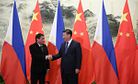
For First Time, China Publicizes Alleged 2016 South China Sea Agreement With Philippines
A statement from the Chinese Embassy in Manila described a “temporary special arrangement” supposedly agreed to during a visit to Beijing by former Philippine President Rodrigo Duterte.

BJP’s Endorsement of Accused Sexual Predator Prajwal Revanna Is Not Surprising
The party has a history of condoning rape and sexual harassment for the sake of power and political expediency.
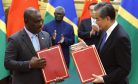
Jeremiah Manele Becomes Solomon Islands Prime Minister
Whatever window of opportunity the election presented for a change of course on the geopolitical front has closed. But Manele has an opportunity still to deflate regional tensions.
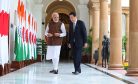
What a Rising India and a New Japan Could Mean for the Indo-Pacific
As the Japan-U.S. relationship continues to evolve, there emerge distinct synergies between U.S.-Japan and India-Japan initiatives.
Most Read

Islamic State Khorasan’s Westward Network Expansion Into Iran, Turkey, and Europe
ISKP’s retooling from regional operations in Afghanistan and Pakistan to a focus on external attacks and operational plots has resulted in a surge of both foiled plots and successful attacks.

India’s Political Satirists Challenge Narendra Modi on Social Media
With the mainstream media doubling up as cheerleaders of the Modi government, YouTubers are speaking truth to power.
For Russia, US Aid to Taiwan Is More Concerning Than $61 Billion to Ukraine
Moscow sees the latest round of military aid to Ukraine as a tactical inconvenience but not a strategic danger. The $8 billion for the Indo-Pacific is the real gamechanger.
Magazine

The China-Pakistan-Afghanistan Triangle
The dynamics of this trilateral relationship will shape the future trajectory of Afghanistan and its broader implications for regional stability and prosperity.

Tandem Rule in Kyrgyzstan: The Pursuit of Money and Power
The Japarov-Tashiev tandem has sunk real roots into Kyrgyzstan’s society, and those roots are deeper and stronger than they might seem on the surface.
Thailand’s Grand Reconciliation: The Shinawatras and the Establishment
The rift between Thaksin and the establishment finally appears to have been resolved. This compromise not only fails to address any of Thailand’s past mistakes, but it actually repeats them.
Darcie Draudt-Véjares on South Korea’s Post-Election Politics
Economics doomed the PPP’s legislative chances. What now for President Yoon Suk-yeol?
Blogs
China Power
A New World Order
For First Time, China Publicizes Alleged 2016 South China Sea Agreement With Philippines
A statement from the Chinese Embassy in Manila described a “temporary special arrangement” supposedly agreed to during a visit to Beijing by former Philippine President Rodrigo Duterte.
China Signals a Loosening of Data and AI Governance
The Reorganization of China’s Space Force: Strategic and Organizational Implications
Elections in Panama: The China Factor
Flashpoints
Diplomacy by Other Means
What a Rising India and a New Japan Could Mean for the Indo-Pacific
As the Japan-U.S. relationship continues to evolve, there emerge distinct synergies between U.S.-Japan and India-Japan initiatives.
Europe and Deterrence in East Asia
Why China Is Wary of US ‘Ironclad’ Alliance With the Philippines
India and Pakistan’s New Shadow Rivalry
Asia Defense
Militaries of the Asia-Pacific

It’s Time for Closer Japan-US Cooperation on Climate Security
For Japan to be a true “global partner” with the U.S., it needs to closely align its understanding and approach to climate change threats to its most important ally.
China’s 3rd Aircraft Carrier, the Fujian, Begins Its Maiden Sea Trial
South Korea Considers Joining AUKUS Pillar II
India as a Net Security Provider in the Indo-Pacific: Ambitious But Attainable
ASEAN Beat
Insights Into Half a Billion

The Battle to Restore Public Trust in Malaysian Media
A revised code of ethics overseen by the government rightly raises concerns about press freedom in Malaysia. There is an alternative solution.
Vietnam’s Parliament Accepts Chair’s Resignation, Announces Interim Replacement
Myanmar Junta Bans Men From Overseas Work in Bid to Stymie Draft Dodgers
The Marcos-Duterte Rift Widens in the Philippines
The Pulse
Perspectives on South Asia
BJP’s Endorsement of Accused Sexual Predator Prajwal Revanna Is Not Surprising
The party has a history of condoning rape and sexual harassment for the sake of power and political expediency.
Bhutan’s Tourism Dilemma: Balancing Economy and Sustainability
The Corporate Takeover of India’s Media
As India Votes, Misinformation Surges on Social Media
The Koreas
Divided Peninsula

South Korea’s Parliament Approves Independent Investigation of Deadly 2022 Halloween Crush
The crush that killed 159 people was one of the biggest peacetime disasters in South Korea.
Transitional Justice in South Korea: A Turn to the Courts?
South Korea’s Opposition Leader Urges President Yoon to Allow Special Investigations
North Korea Sends Workers to Russia-Occupied Territory in Eastern Ukraine
Tokyo Report
News From Japan

The Debate
Comment and Opinion
Taiwan’s Human Rights Priorities After the 2024 Elections
Despite demonstrating a strong human rights record, there is still room for Taiwan to improve – especially on migrant workers' rights and refugee law.
Why the SDGs Should Be Revised to Meet the Needs of Indigenous Peoples
Asia-Pacific States Must Divorce Their Industry Friends for a Strong Global Plastics Treaty
Taiwan Is Indispensable in Preparing for Future Pandemics
Crossroads Asia
The New Silk Road
US Religious Freedom Watchdog Recommends Kyrgyzstan for Special Watch List
For the first time, all five Central Asian states are named in some fashion in the annual USCIRF report for violating religious freedoms.
UK Foreign Secretary’s Visit to Central Asia: Deciphered
Tajikistan Advises Citizens Against Travel to Russia
Fines for Critics in the Aftermath of Kazakhstan’s Terrible Spring Floods
Trans-Pacific View
U.S. Policy on Asia
A Blueprint for a Functional China-US Working Group on AI
Provided the United States and China can focus on practical considerations, the promised working group could be a significant source of stability.
Does a New Book on the China Threat Preview a Second Trump Presidency?
As Blinken Heads to China, What’s on the Agenda?
Leadership Shift in the House China Select Committee Could Cripple Congress’ Anti-China Momentum
Pacific Money
Economy And Business
Despite the ‘De-risking’ Buzz, Some Multinationals Are Doubling Down in China
In the future we are likely to see fewer new entrants into the Chinese market, while players with established operations there will get bigger and stronger, more focused on serving Chinese consumers and businesses.
Microsoft CEO Announces AI Investments in Indonesia, Thailand
Samsung Reports a 10-fold Increase in Profit as AI Drives Rebound in Memory Chip Markets
Southeast Asian Tourism Slowly, But Steadily, Recovered in 2023
Oceania
The South Pacific
Jeremiah Manele Becomes Solomon Islands Prime Minister
Whatever window of opportunity the election presented for a change of course on the geopolitical front has closed. But Manele has an opportunity still to deflate regional tensions.
The Inevitability of Indian Spies in Australia
Fiji and Rabuka’s Peacemaking Ambitions
Australian Ministers Won’t Comment on Media Reports That Indian Spies Were Secretly Expelled
Videos
Asia on Video

The Danger of China’s Digital Silk Road
Michael Caster discusses the link between China's digital investments abroad and digital repression.
What Will China’s Shift From Oil Mean for Saudi Arabia and Russia?
Why Did the Islamic State Target Russia?
Is China Committing Environmental Crimes in the South China Sea?
Podcasts
Asia Geopolitics

Photo Essays
Asia in Pictures

Life Along the Thai-Myanmar Frontier
The border town of Myawaddy has now fallen and ethnic rebels want negotiations with the Thai government.