



Latest Stories

How India Uses National Interest as a Smokescreen to Muzzle the Media
The Indian government is weaponizing “national interest” measures to close down reporting it deems critical of the Modi government.

The Data Quagmire for German Carmakers in China
The renewal of the Sino-German MoU on autonomous vehicles opens up questions around data privacy, security, and Germany’s industrial competitiveness.

Cotton Campaign Urges Uzbekistan to Investigate Harassment of Activists
In April, noted Uzbek human rights activist Umida Niyazova and a journalist were harassed by two men as they planned to tour Fergana and speak to farmers.

New Zealand’s Geopolitical Friendly Fire Has Its Limits
Australia and Canada are on the receiving end of fiery remarks made by New Zealand ministers, but there are limits to the tough talk.
Most Read

Islamic State Khorasan’s Westward Network Expansion Into Iran, Turkey, and Europe
ISKP’s retooling from regional operations in Afghanistan and Pakistan to a focus on external attacks and operational plots has resulted in a surge of both foiled plots and successful attacks.

India’s Political Satirists Challenge Narendra Modi on Social Media
With the mainstream media doubling up as cheerleaders of the Modi government, YouTubers are speaking truth to power.

For Russia, US Aid to Taiwan Is More Concerning Than $61 Billion to Ukraine
Moscow sees the latest round of military aid to Ukraine as a tactical inconvenience but not a strategic danger. The $8 billion for the Indo-Pacific is the real gamechanger.
Magazine

The China-Pakistan-Afghanistan Triangle
The dynamics of this trilateral relationship will shape the future trajectory of Afghanistan and its broader implications for regional stability and prosperity.

Tandem Rule in Kyrgyzstan: The Pursuit of Money and Power
The Japarov-Tashiev tandem has sunk real roots into Kyrgyzstan’s society, and those roots are deeper and stronger than they might seem on the surface.

Thailand’s Grand Reconciliation: The Shinawatras and the Establishment
The rift between Thaksin and the establishment finally appears to have been resolved. This compromise not only fails to address any of Thailand’s past mistakes, but it actually repeats them.
Darcie Draudt-Véjares on South Korea’s Post-Election Politics
Economics doomed the PPP’s legislative chances. What now for President Yoon Suk-yeol?
Blogs
China Power
A New World Order
Flashpoints
Diplomacy by Other Means

The Data Arms Race in China-US Technological Competition
The restrictive strategies adopted by both nations are setting precedents for data governance, cybersecurity, and international trade protocols in the digital age.
What a Rising India and a New Japan Could Mean for the Indo-Pacific
Europe and Deterrence in East Asia
Why China Is Wary of US ‘Ironclad’ Alliance With the Philippines
Asia Defense
Militaries of the Asia-Pacific
ASEAN Beat
Insights Into Half a Billion

Anwar Ibrahim has a China Problem at Luconia Shoals
The repeated Chinese incursions in the country’s exclusive economic zone is a problem for Malaysia – and for the region as a whole.
Press Watchdog Paints Grim Picture of Southeast Asian Media Freedoms
Vietnam Arrests Another Senior Figure in Anti-Corruption Drive
The Battle to Restore Public Trust in Malaysia’s Media
The Pulse
Perspectives on South Asia
How India Uses National Interest as a Smokescreen to Muzzle the Media
The Indian government is weaponizing “national interest” measures to close down reporting it deems critical of the Modi government.
China-Bangladesh Military Exercises Signal Shifting Geopolitical Landscape
India’s Spying Upsurge Can Complicate Security Ties With the West
BJP’s Endorsement of Accused Sexual Predator Prajwal Revanna Is Not Surprising
The Koreas
Divided Peninsula

South Korea’s Parliament Approves Independent Investigation of Deadly 2022 Halloween Crush
The crush that killed 159 people was one of the biggest peacetime disasters in South Korea.
Transitional Justice in South Korea: A Turn to the Courts?
South Korea’s Opposition Leader Urges President Yoon to Allow Special Investigations
North Korea Sends Workers to Russia-Occupied Territory in Eastern Ukraine
Tokyo Report
News From Japan

The Debate
Comment and Opinion

Xi Jinping Visit Gives France’s Macron Chance to Raise China’s Uyghur ‘Genocide’
A leading Uyghur diaspora activist says that Paris should adopt robust sanctions such as those adopted in the United States in recent years.
Taiwan’s Human Rights Priorities After the 2024 Elections
Why the SDGs Should Be Revised to Meet the Needs of Indigenous Peoples
Asia-Pacific States Must Divorce Their Industry Friends for a Strong Global Plastics Treaty
Crossroads Asia
The New Silk Road
Cotton Campaign Urges Uzbekistan to Investigate Harassment of Activists
In April, noted Uzbek human rights activist Umida Niyazova and a journalist were harassed by two men as they planned to tour Fergana and speak to farmers.
US Religious Freedom Watchdog Recommends Kyrgyzstan for Special Watch List
UK Foreign Secretary’s Visit to Central Asia: Deciphered
Tajikistan Advises Citizens Against Travel to Russia
Trans-Pacific View
U.S. Policy on Asia
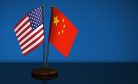
A Blueprint for a Functional China-US Working Group on AI
Provided the United States and China can focus on practical considerations, the promised working group could be a significant source of stability.
Does a New Book on the China Threat Preview a Second Trump Presidency?
As Blinken Heads to China, What’s on the Agenda?
Leadership Shift in the House China Select Committee Could Cripple Congress’ Anti-China Momentum
Pacific Money
Economy And Business
The Data Quagmire for German Carmakers in China
The renewal of the Sino-German MoU on autonomous vehicles opens up questions around data privacy, security, and Germany’s industrial competitiveness.
Despite the ‘De-risking’ Buzz, Some Multinationals Are Doubling Down in China
Microsoft CEO Announces AI Investments in Indonesia, Thailand
Samsung Reports a 10-fold Increase in Profit as AI Drives Rebound in Memory Chip Markets
Oceania
The South Pacific
New Zealand’s Geopolitical Friendly Fire Has Its Limits
Australia and Canada are on the receiving end of fiery remarks made by New Zealand ministers, but there are limits to the tough talk.
Jeremiah Manele Becomes Solomon Islands Prime Minister
The Inevitability of Indian Spies in Australia
Fiji and Rabuka’s Peacemaking Ambitions
Videos
Asia on Video

The Danger of China’s Digital Silk Road
Michael Caster discusses the link between China's digital investments abroad and digital repression.
What Will China’s Shift From Oil Mean for Saudi Arabia and Russia?
Why Did the Islamic State Target Russia?
Is China Committing Environmental Crimes in the South China Sea?
Podcasts
Asia Geopolitics
Photo Essays
Asia in Pictures

Life Along the Thai-Myanmar Frontier
The border town of Myawaddy has now fallen and ethnic rebels want negotiations with the Thai government.